
Usually the deep purple roots of beets are eaten boiled, roasted, or raw, and either alone or combined with any salad vegetable. A large proportion of the commercial production is processed into boiled and sterilized beets or into pickles. In Eastern Europe, beet soup, such as borscht, is common. In Indian cuisine, chopped, cooked, spiced beet is a common side dish. Yellow-coloured beetroots are grown on a very small scale for home consumption.[15] The green, leafy portion of the beet is also edible. The young leaves can be added raw to salads, whilst the mature leaves are most commonly served boiled or steamed, in which case they have a taste and texture similar to spinach.
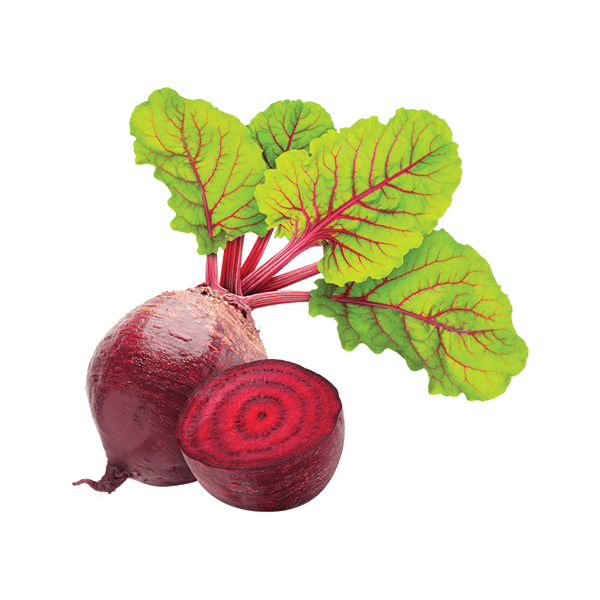
Beetroot
Nutrition
Raw beetroot is 88% water, 10% carbohydrates, 2% protein, and less than 1% fat (see table). In a 100-gram (3 1⁄2-ounce) amount providing 180 kilojoules (43 kilocalories) of food energy, raw beetroot is a rich source (27% of the Daily Value – DV) of folate and a moderate source (16% DV) of manganese, with other nutrients having insignificant content (table).
Reviews
There are no reviews yet.